
Wingsuit Performance Flying
In addition to the individual ranking of flights, this site supports judging Wingsuit Perfomance Competitions with the three combined categories time, distance and speed.
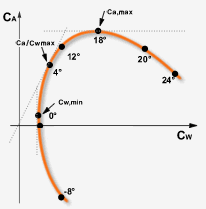
The rules for these competitions are based on the well established FAI F3B class for model-sailplanes to measure the different aspects of high-performance flying. This format measures the three different performance parameters of an airplane (best lift, least drag and best glide ratio) and combines them into a single result instead of concentrating on one parameter only, which would inevitably give an unfair advantage to a pilot with a certain build and would lead to suits optimized into one direction only. Therefore, the same suit without any changes or modifications of parts must be used for all tasks of a single round. No weights must be worn. Propulsion systems must not be used. No electronic devices should be worn near the official measuring device.
Competitors should be grouped into 'Advanced', 'Intermediate' and 'Rookie' classes based on this table. 'Tracking' can also be included as a separate class.
Tasks
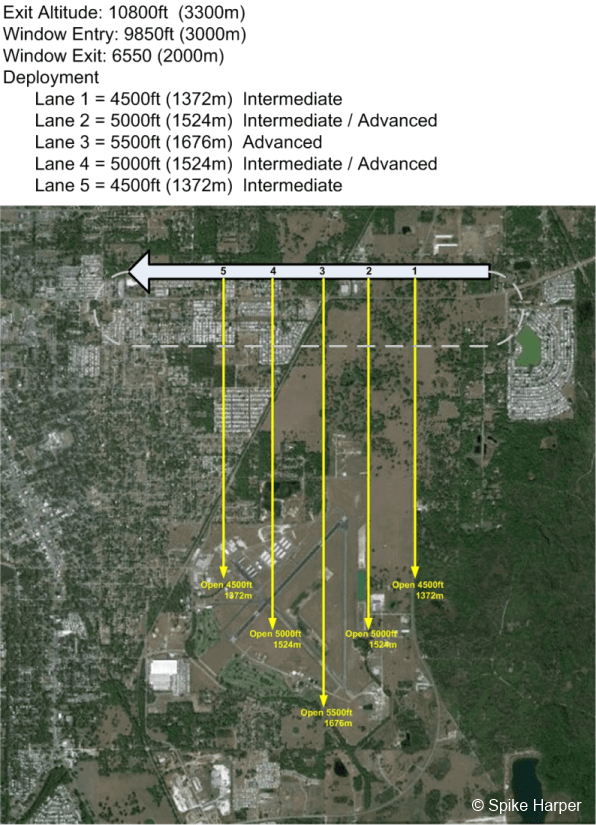
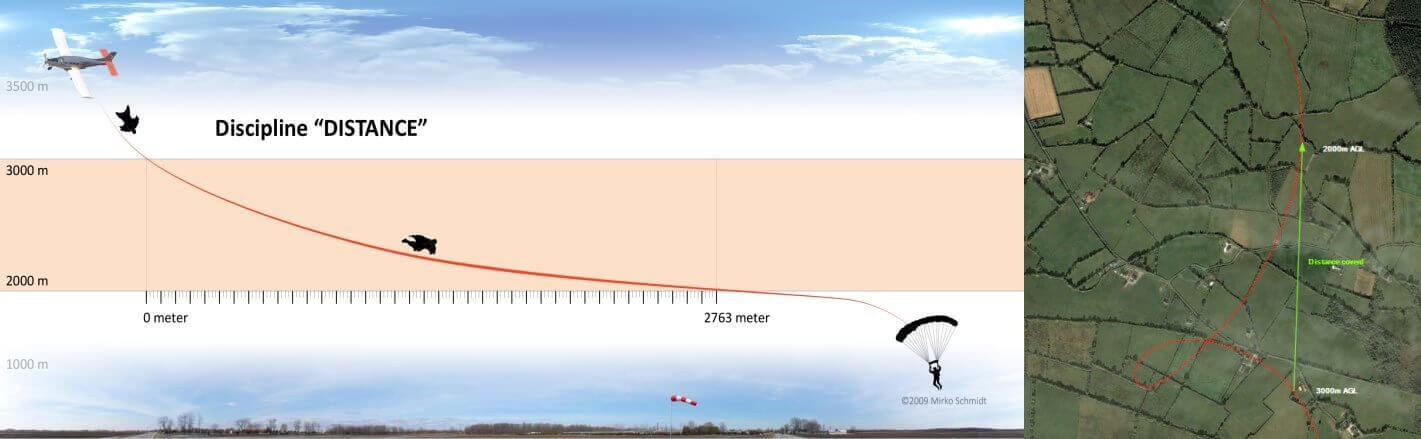
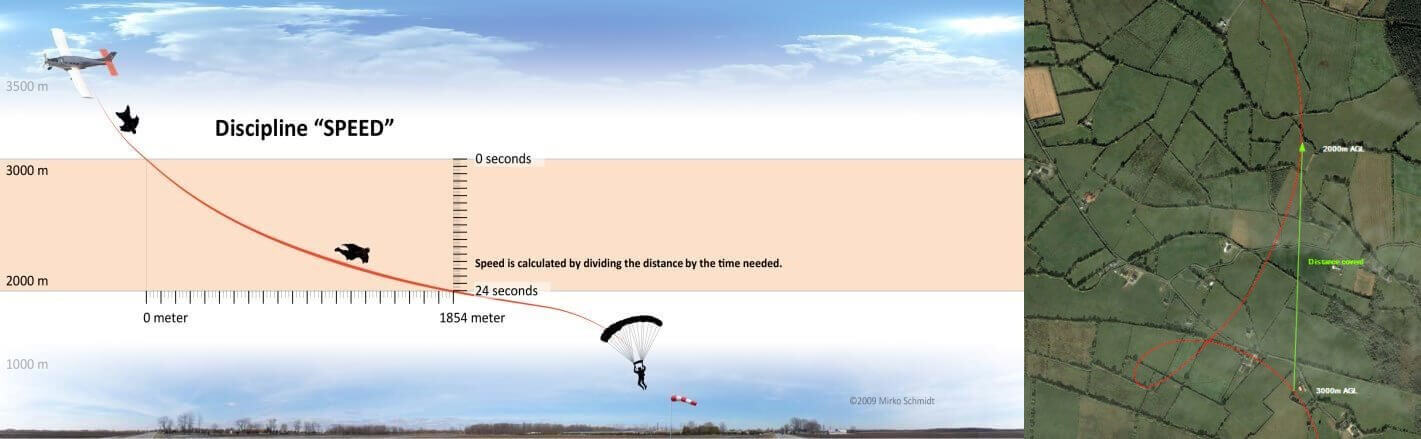
Each task is judged like the individual competitions on this site in a 1000m (3300ft) window between 3000m (9850ft) and 2000m (6550ft) AGL. Should the competitor cross the borders of the competition window multiple times, the first crossing of the border counts.
A crosswind jumprun 2-4 nm upwind of the DZ is suggested to give every competitor a clean shot back to the DZ. Staggered openings should further increase seperation. Exit altitude should be between 12000 and 12500ft (3650-3810m) AGL to allow competitors to set-up towards the DZ and to settle into a good flying position while preventing excessive diving.
For the time task, the time spent in the evaluation window counts; the longer you stay in the competition window, the better.
For the distance task, the horizontal distance covered over ground while in the evaluation window counts; the further you fly while in the competition window, the better.
For the speed task, the highest average horizontal speed over ground achieved while in the evaluation window counts; the further you fly in the shortest time while in the competition window, the better.
The results of each single task in a round will be normalized to the best result of this task, i.e. the competitor performing best in a given task receives a score of 100% with the other competitors receiving scores according to their relative performance. No points will be rewarded for a task not flown. Zero points may be awarded for safety violations.
The order of tasks and the number of rounds for each task is at the discretion of the organiser, although a two rounds should be flown for each task. All participants should perform a task on the same or adjacent loads to minimize wind influence.
Scoring
The scores for all rounds for each task will be averaged for each competitor and added up to calculate the overall ranking for this event for a maximum of 300 points. All completed tasks will count towards the final score.
Every flight uploaded during a competition will automatically be included in the worldwide online ranking.
Speed Skydiving
Speed Skydiving was developed from 1999 on by the ISSA and represents the fastest non-motorized sport on Earth. In essence, speed skydiving is the discipline where only one aspect of the skydiving counts – vertical freefall speed.
Running a Competition
The Paralog Performance Competition has a proven track record of 20 years of supporting and developing Wingsuit Performance Flying with 150+ succesfully judged competitons and 15,600+ processed Wingsuit Performance Flights from 1200+ Wingsuit Pilots. Paralog® combined with the FlySight GPS logger and the Paralog Performance competiton web site provide a tightly integrated solution for judging a Wingsuit Performance Competition with a seamless judging workflow from competitor registration to online publication of the results. Please contact us for further details if you are interested in organising an event.